The world of mobility is in constant transformation. With the advancement of digital technologies, the growing concern for sustainability, and the need to improve user experience, solutions are emerging that promise to reshape the future of transportation. By 2025, these trends are expected to solidify and revolutionize the way we move. In this scenario, the role of platforms like SIMM.PRO becomes even more necessary.
Join us in this article to explore the Mobility trends for 2025! 😃
1. Smart and Personalized Mobility
With the popularization of technologies based on Artificial Intelligence (AI) and the Internet of Things (IoT), transportation systems will become more connected and intelligent. This means that journeys will be tailored to the individual needs of passengers. Solutions like SIMM.PRO, with its ability to program and transmit dynamic and personalized content, will be essential to meet these demands.
For example, the dynamic content feature allows information to be adjusted based on predetermined criteria, such as weather conditions, passenger flow, and operational status, thereby delivering relevant and targeted information to your audience. This flexibility increases operational efficiency and significantly enhances the user experience.
2. Sustainability as a Priority
Sustainability is no longer optional. Electric vehicles, renewable energy, and emission reduction are pillars of global mobility policies. In parallel, more comprehensive communication systems help reduce resource waste.
SIMM.PRO stands out by offering an infrastructure that facilitates the rapid and efficient transmission of relevant information. Its ability to manage communication zones and integrate various media (video, audio, and text) allows transportation companies to optimize resources and reduce environmental impacts. For example, an announcement about a train's arrival can be transmitted only to the corresponding area, avoiding dispersion and preventing resource waste (such as paper for static signage).
3. Cybersecurity and Connectivity
With the increasing dependence on connected technologies, cybersecurity has become one of the main concerns in this sector. Some systems, like SIMM.PRO, already incorporate robust security protocols, such as data encryption and constant monitoring, to protect information and operations.
Additionally, the solution supports redundant connectivity, meaning that even if the main connection fails, there are other mechanisms to continue functioning, ensuring that important messages reach passengers.
4. Increased Digitalization and Interactivity
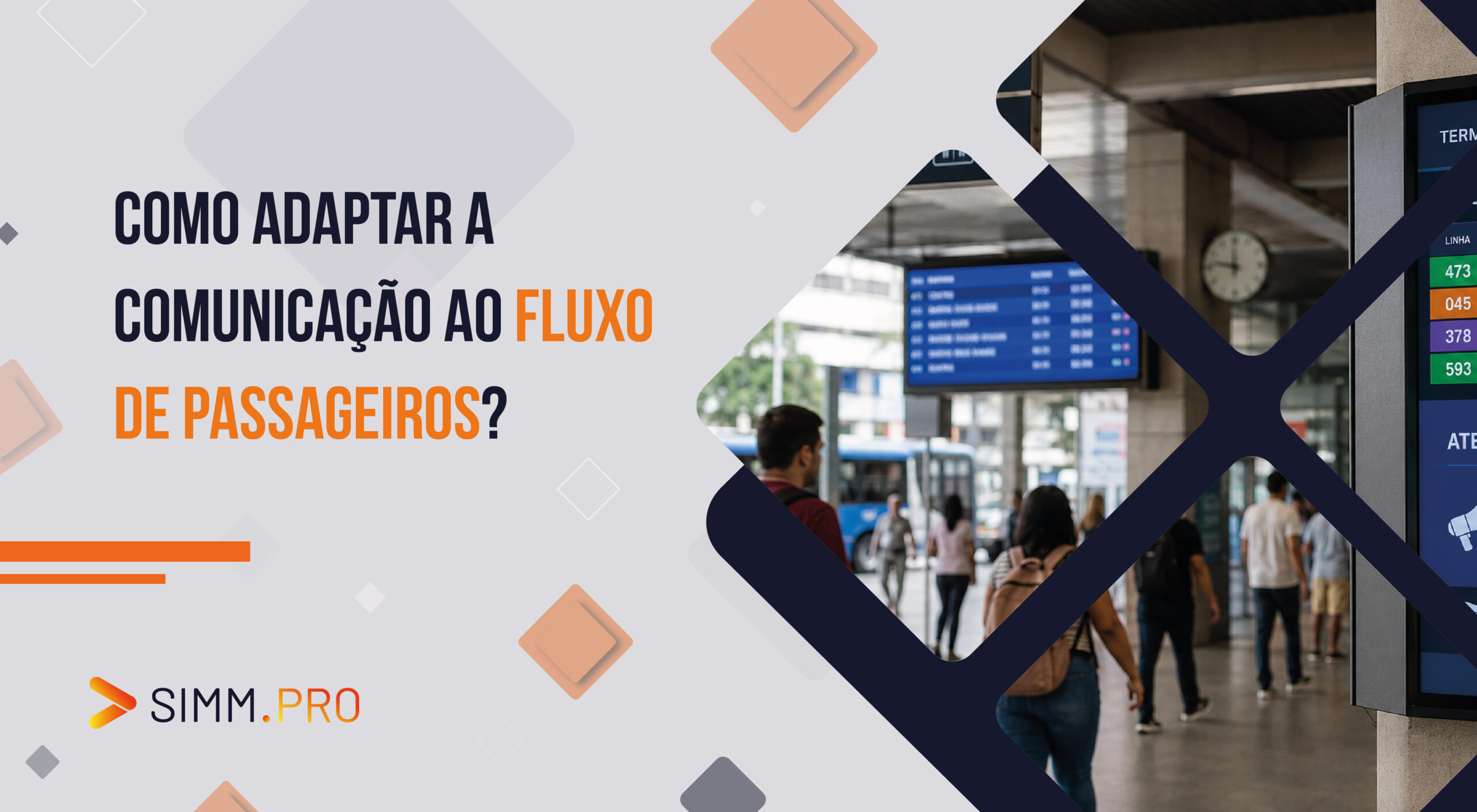
Digitalization continues to transform the passenger experience. Integrated passenger information systems (PIS) and public address (PA) systems will play a fundamental role.
Digital signage monitors combining videos, images, and text, along with the programming flexibility of SIMM.PRO, create interactive and engaging experiences. This approach improves communication and helps mitigate passenger anxiety by providing clear and accurate information at every stage of the journey.
5. Challenges and Opportunities
Although the trends are promising, challenges such as the integration of technologies and infrastructure still persist. SIMM.PRO positions itself as an ally to overcome these obstacles, offering national solutions with local support, which is necessary for companies seeking agility in problem resolution.
The ability to conduct complete and incomplete events is a differentiator that makes the system more adaptable to operational complexities. Furthermore, the intuitive interface and simplified device registration ensure a smooth transition to the adoption of new technologies.
The Future of Mobility
Mobility is being shaped by technological solutions that prioritize efficiency, sustainability, and user experience. By 2025, systems like SIMM.PRO will play a central role in connecting people, improving communication, and ensuring safe and agile operations. Companies that embrace these trends will be better prepared to face future challenges and lead this sector.
As we prepare for a future of more connected and sustainable mobility, the SIMM.PRO team wishes everyone a New Year filled with innovation, progress, and achievements!