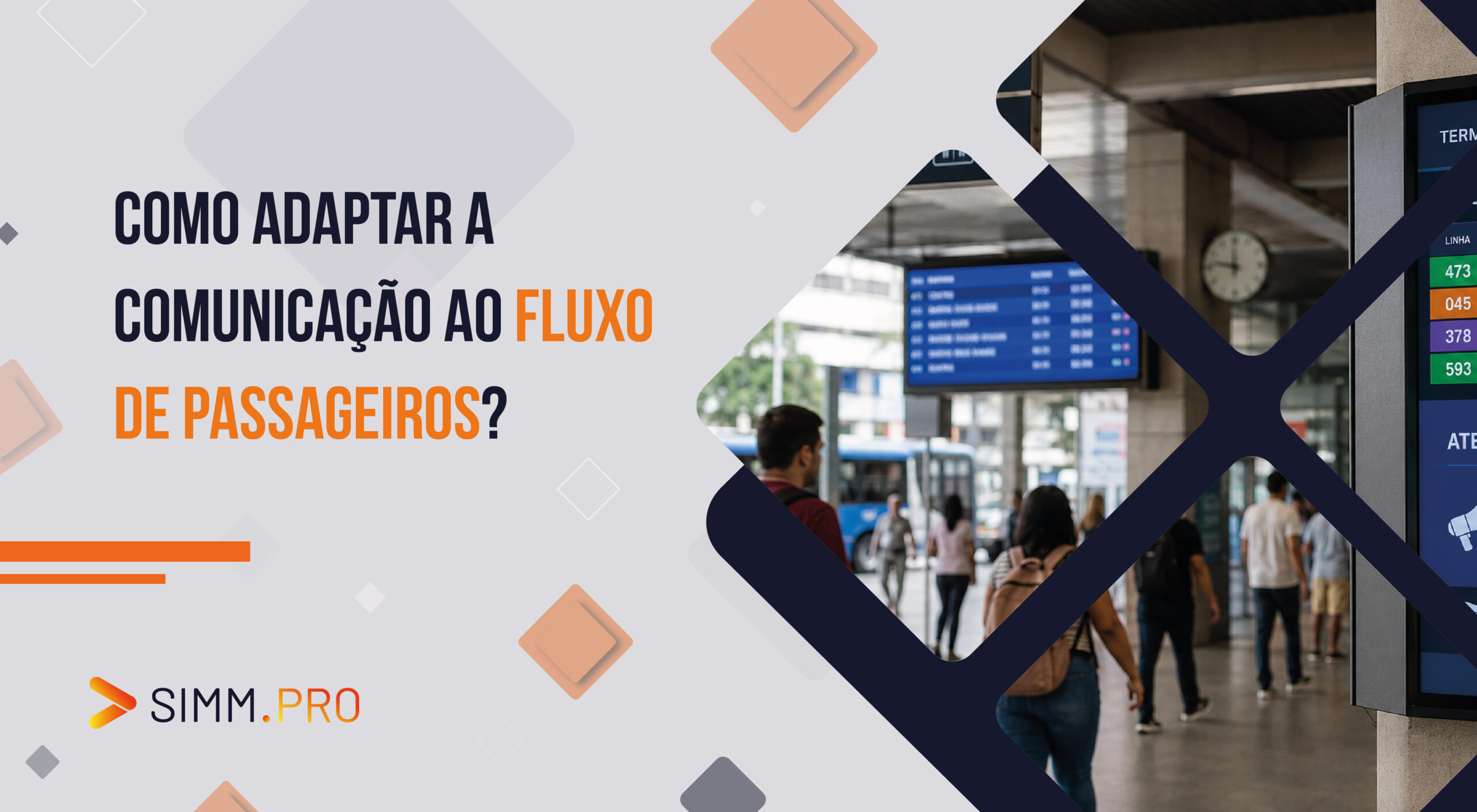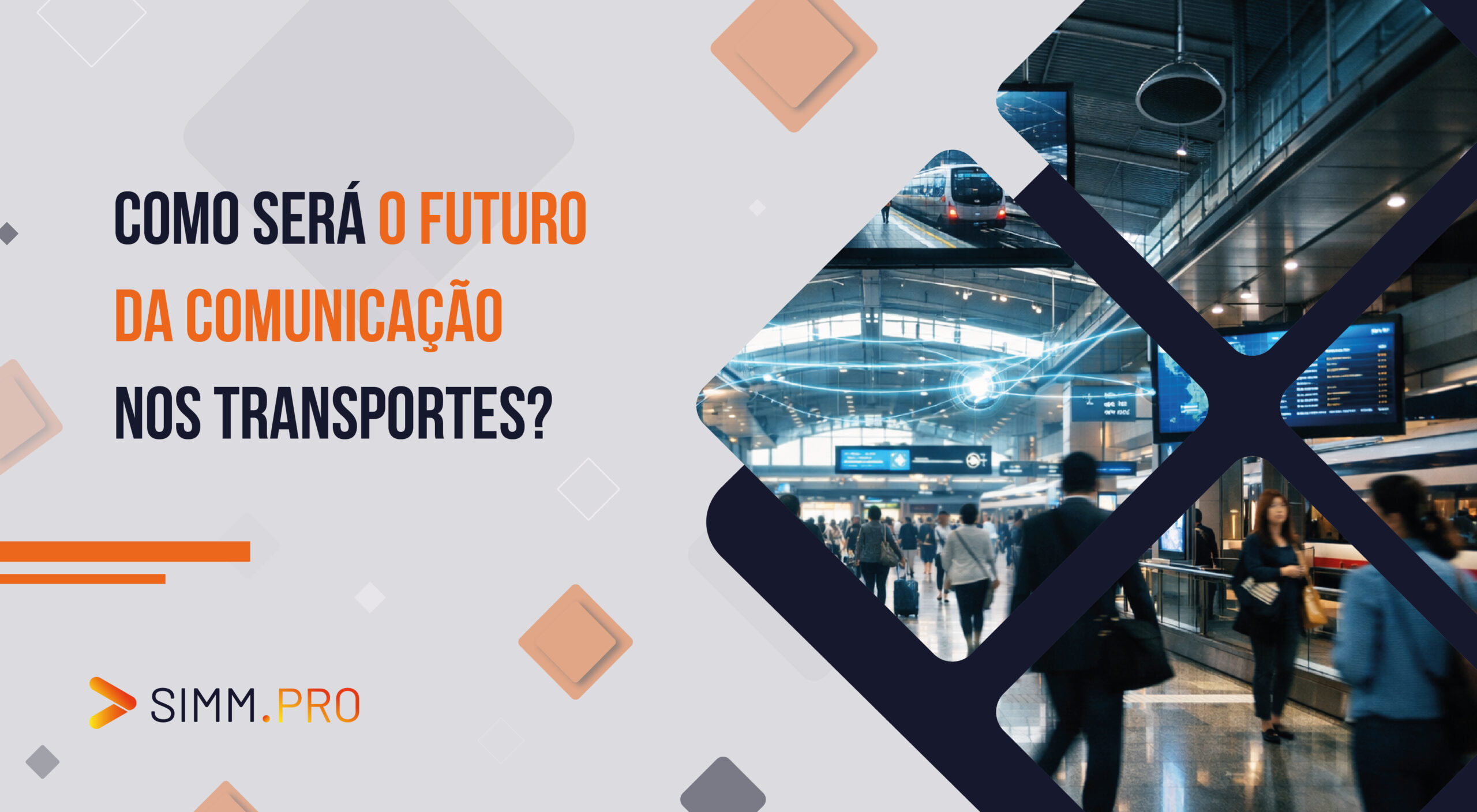
Urban mobility is evolving rapidly. The growth of cities, the increase in passenger flow, and the complexity of operations require transportation systems to be increasingly efficient, organized, and connected.
In this scenario, communication has become one of the most important pillars for the functioning of operations. More than just transmitting announcements or informing schedules, it needs to ensure that passengers and operational teams receive clear, accurate information at the right time.
With the advancement of digital technologies and connectivity, the way this information is distributed is changing. Integrated platforms, automation, and real-time communication are redefining how terminals, stations, and airports communicate with thousands of people every day.
It is within this transformation that solutions like SIMM.PRO stand out, offering a new approach to communication in mobility environments.
In this article, we will understand how technology is shaping the future of communication in transportation and why this topic has become so strategic for operators and infrastructure managers. 😊
Why is Communication So Important in Transportation Systems?
Transportation environments are, by nature, dynamic and complex. Platform changes, delays, operational adjustments, and even emergency situations can happen at any moment.
When communication is not efficient, small failures can lead to confusion, delays, and even larger operational problems. On the other hand, when information is transmitted clearly and consistently, the entire operation becomes more organized.
For passengers, this means having quick access to important guidance, such as boarding platforms, updated schedules, or operational announcements. For the teams responsible for managing the infrastructure, it means greater control over the flow of information and more agility in decision-making.
Therefore, communication has ceased to be just an operational support and has become an essential part of the technological infrastructure of urban mobility.
How is Technology Improving Communication in Mobility?
For many years, communication systems in transportation environments operated in isolation. Information panels, audio announcements, and visual systems operated separately, making it difficult to update information simultaneously.
Today, the trend is complete integration of these systems.
With technological advancements, it is possible to centralize different communication channels into a single platform, allowing all devices to share information in real time.
This means that an operational update can be automatically reflected in different points of the environment, such as:
- information monitors
- LED panels
- audio systems
- network-connected devices
This integration ensures that the same message is transmitted consistently to all passengers, reducing errors and improving operational efficiency.
Additionally, process automation allows many pieces of information to be updated automatically, reducing reliance on manual interventions.
How Does SIMM.PRO Modernize Communication in Transportation Environments?
To keep up with the evolution of urban mobility, it is essential to have platforms capable of integrating different technologies into a single management system.
SIMM.PRO was developed precisely to meet this need. The platform centralizes and manages communication systems in environments such as bus terminals, train stations, airports, and other mobility infrastructures.
Through a single management interface, operators can control different resources, such as:
- IP audio systems for automated or live announcements
- digital monitors for displaying information and dynamic content
- LED panels for real-time visual communication
- integration with IoT devices
- programming and scheduling of informative content
This integrated approach facilitates communication management and allows operators to have a complete view of the entire system.
Moreover, the platform is designed to be scalable and flexible, adapting to different types of projects and infrastructures.
How Does Real-Time Communication Improve Passenger Experience?
For those who use transportation daily, having the correct information at the right time can make all the difference.
Platform changes, delays, or route alterations need to be communicated quickly to avoid confusion and improve the organization of passenger flow.
With integrated communication systems, it is possible to update information instantly across all connected devices. This ensures that passengers receive clear guidance regardless of where they are within the terminal or station.
Additionally, the combination of visual and auditory communication makes information more accessible to different user profiles, including people with varying accessibility needs.
Environments with well-structured communication tend to convey more confidence, organization, and safety to the public.
What to Expect from the Future of Communication in Transportation?
The trend is for communication systems in mobility environments to become increasingly intelligent and connected.
With the advancement of smart cities and the digitization of urban infrastructure, new technologies are expected to further expand communication possibilities, including:
- advanced automation of announcements
- integration with mobility apps
- data analysis for optimizing passenger flow
- integration with connected urban systems
These technologies will allow transportation communication to shift from being merely reactive to acting more strategically, anticipating needs and helping to improve operational efficiency.
Integrated platforms like SIMM.PRO already represent an important step in this evolution, providing a technological foundation prepared to keep pace with the future of mobility.
Why Invest in Smart Communication in Transportation?
Investing in efficient communication is directly investing in the quality of operations and the passenger experience.
Integrated systems help reduce information failures, improve the organization of environments, and ensure that everyone receives clear guidance during their journey.
By adopting modern technological solutions, transportation infrastructure operators can transform communication into a strategic resource, capable of increasing operational efficiency and enhancing the experience of those who use the system every day.
In an increasingly connected mobility landscape, smart communication is no longer just a trend but a fundamental element for the future of transportation. Now that you understand the importance of modernizing communication in transportation, how about requesting a quote from our specialized team?