The passenger experience has never been as strategic as it is today. In an increasingly dynamic mobility scenario, with large volumes of people moving daily, the way information is transmitted directly impacts the perception of service quality.
More than just transporting people, operators need to ensure clarity, safety, and predictability throughout the journey. This is where the integrated use of audio, video, and the Internet of Things (IoT) becomes essential.
But how do these technologies really impact daily life, and what results can they generate in practice? Continue reading to discover how to transform communication into experience. 😊
Why does communication impact the passenger experience so much?
Anyone who uses public transport knows that the greatest discomfort often lies not in the journey itself, but in the lack of information. Uncertainty about schedules, unexpected changes, or difficulty navigating within terminals can lead to anxiety and frustration.
When communication works well, the scenario changes completely. The passenger feels safer, more confident, and in control of their journey. This reduces stress and significantly improves the perception of the service.
This experience is therefore directly linked to the quality and timing of the information delivered, something that integrated platforms like SIMM.PRO help to ensure efficiently.
How does audio improve communication in busy environments?
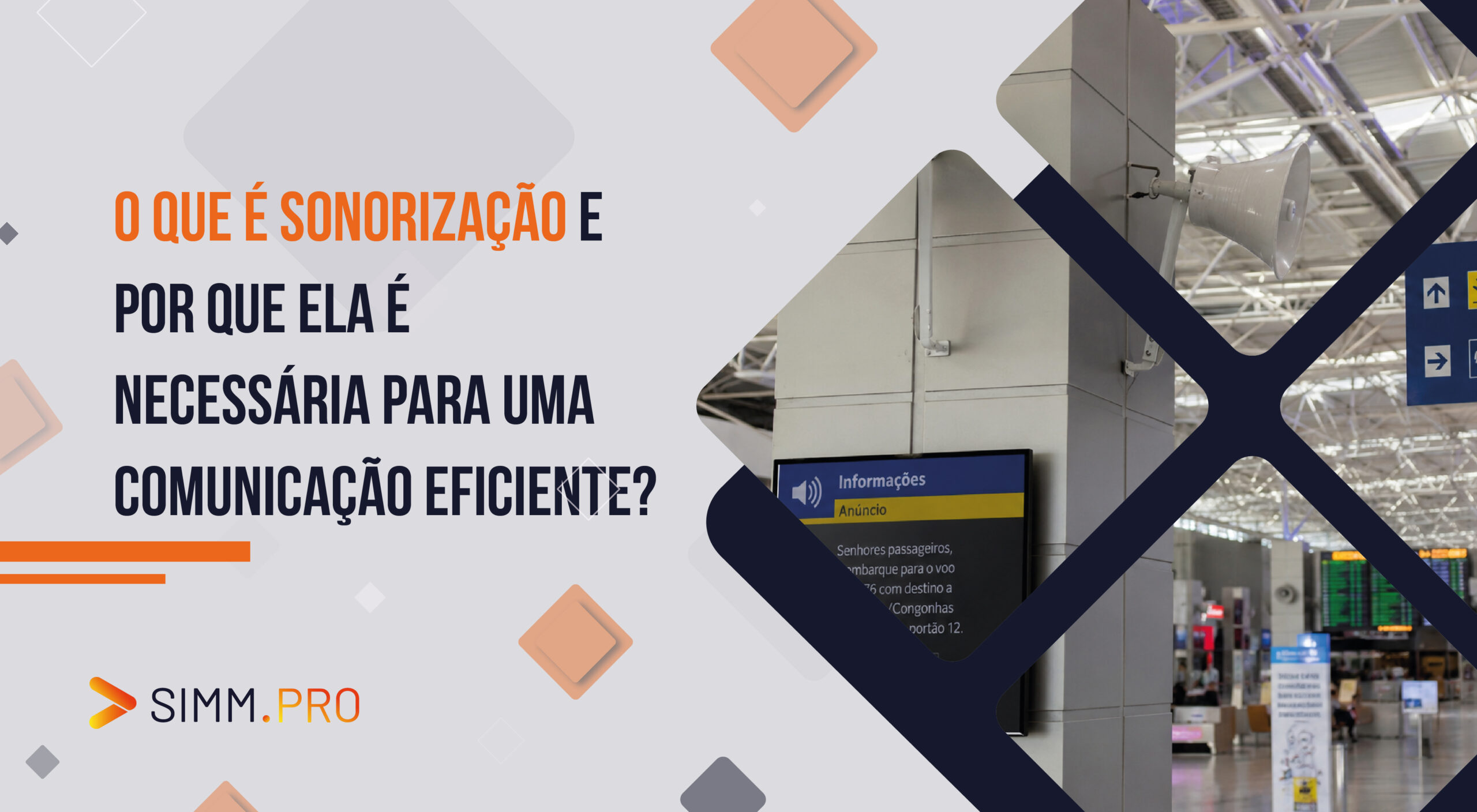
Even with the advancement of visual technologies, audio remains one of the most effective resources for communicating with passengers. In high-traffic environments, such as stations and terminals, it stands out for reaching many people at once without requiring visual attention.
Well-structured audio announcements can guide, alert, and inform immediately. This is especially important in operational situations, such as platform changes, delays, or emergencies.
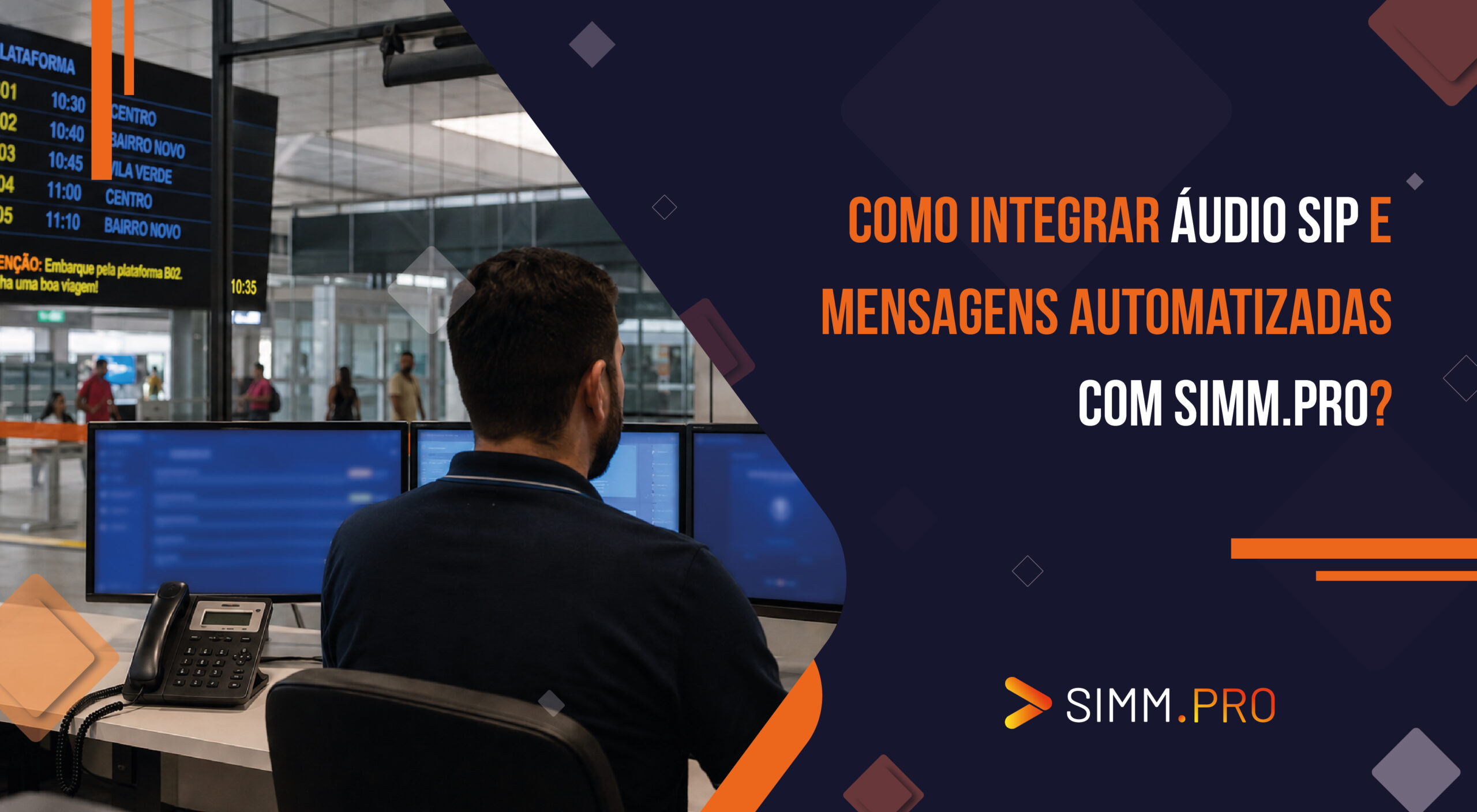
When integrated with intelligent systems, audio can be automated or triggered in real-time, ensuring consistency and agility in communication.
How does video contribute to passenger orientation?
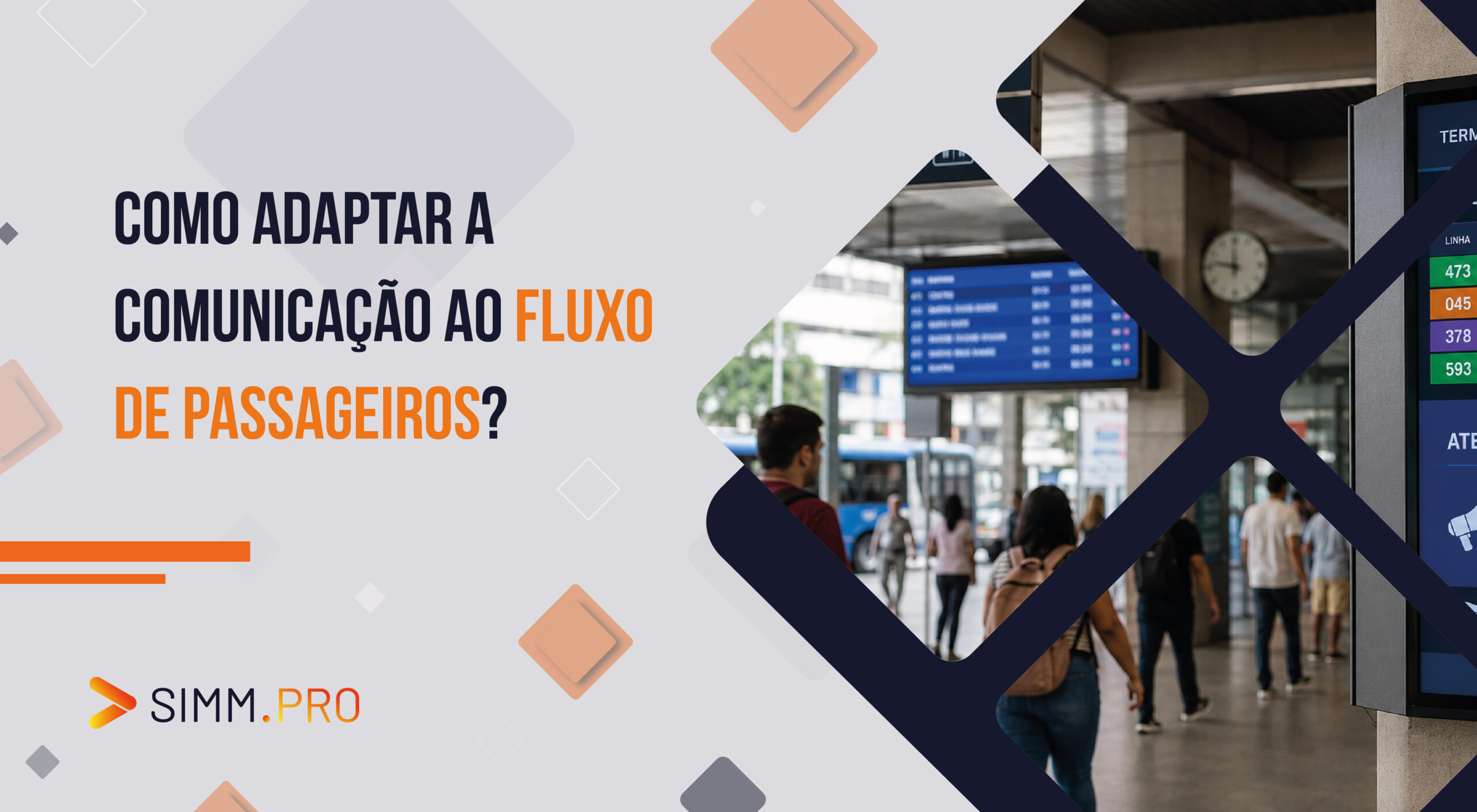
If audio informs quickly, video complements with visual clarity. Digital monitors allow for organized and intuitive viewing of schedules, destinations, and operational changes.
This visual layer reduces doubts and facilitates decision-making, especially in more complex environments. Additionally, video makes communication more modern and engaging, with dynamic content that can be updated in real-time.
Another relevant point is the ability to adapt communication according to the context, such as peak hours or specific events.
What is IoT and what is its role in urban mobility?
The Internet of Things, known as IoT, connects devices, systems, and data in real-time. In transportation, this means transforming communication into something dynamic and intelligent.
With the use of sensors and integrations, the system can identify operational changes and react automatically. An increase in passenger flow or a delay, for example, can generate immediate updates on monitors and audio announcements.
This level of automation reduces human errors and ensures that everyone always receives the correct information at the right time.
What happens when audio, video, and IoT work together?
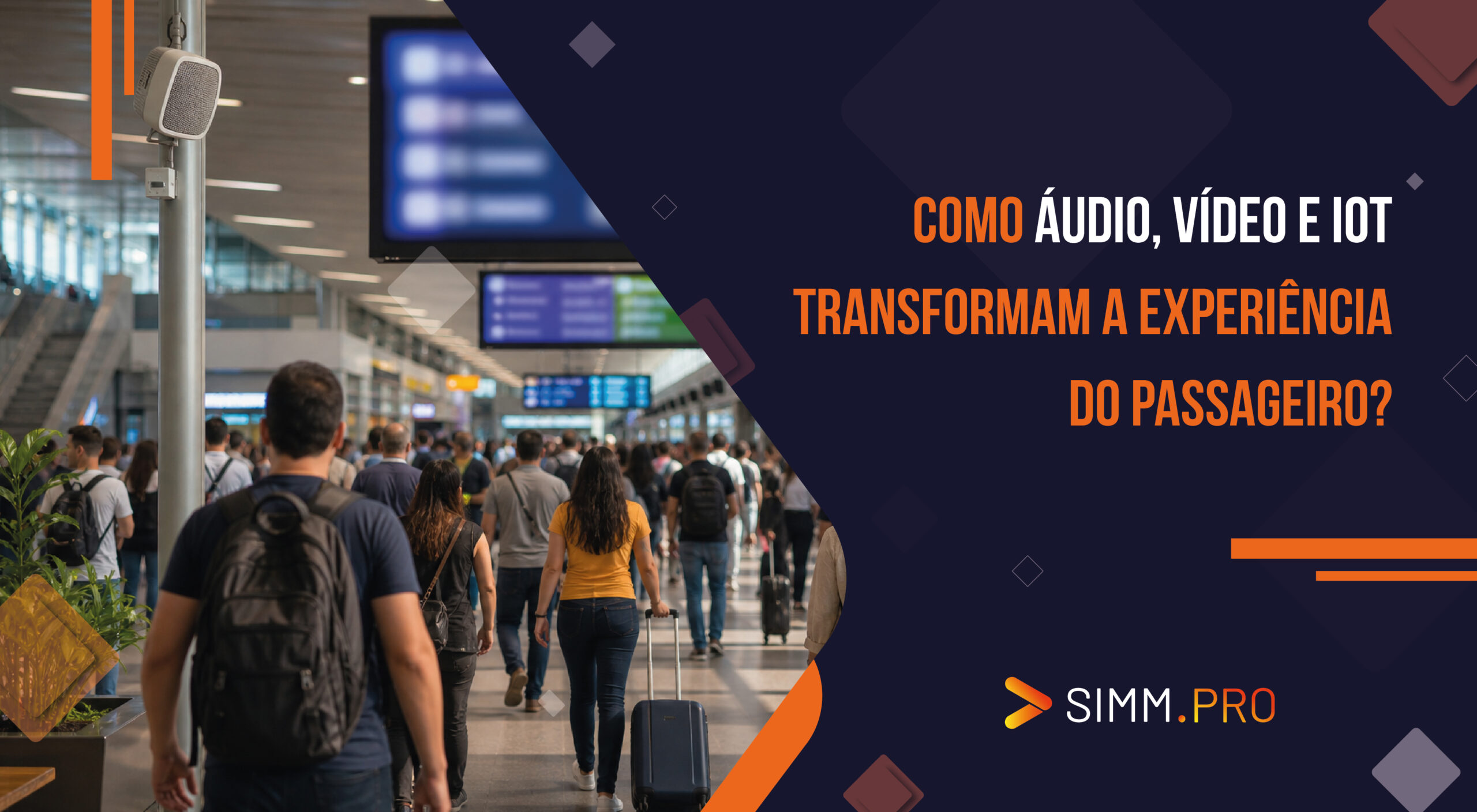
The biggest advantage lies in the integration of these technologies. When they work together, communication becomes more efficient, synchronized, and reliable.
In a situation of operational change, for example, the system can update monitors and trigger announcements automatically, ensuring that everyone is informed consistently.
This avoids communication breakdowns and directly improves the user experience.
What are the benefits of this integration for operators and passengers?
For operators, this integration brings more control, efficiency, and predictability. Processes that previously relied on manual action become automated, reducing errors and optimizing resources.
For passengers, the impact is felt in practice. The journey becomes clearer, more organized, and less stressful. Trust in the system increases, as does the sense of safety.
In this context, technology acts as a link between operation and experience.
Ready to transform your passenger experience?
The integrated use of audio, video, and IoT represents a significant evolution in communication with passengers.
More than just informing, these technologies allow for the creation of safer, more organized, and efficient experiences. By connecting data, automating processes, and integrating channels, operators can meet the expectations of an increasingly demanding audience.
With SIMM.PRO, this transformation happens in a practical, centralized, and scalable way, serving everything from smaller operations to large transportation systems. If your operation seeks more efficiency, innovation, and a better experience for passengers, how about getting a quote from our specialized team?