In a transportation operation or a high-traffic environment, communicating information isn’t just about transmitting it—it’s about ensuring it reaches passengers clearly, at the right moment, and through the most appropriate channel.
Imagine a platform change at a station, a gate modification at an airport, or a temporary interruption along a specific route. In situations like these, every second counts. Passengers need to be informed quickly, while operational teams must update multiple communication channels without creating conflicting information.
This is where an integrated communication platform becomes crucial.
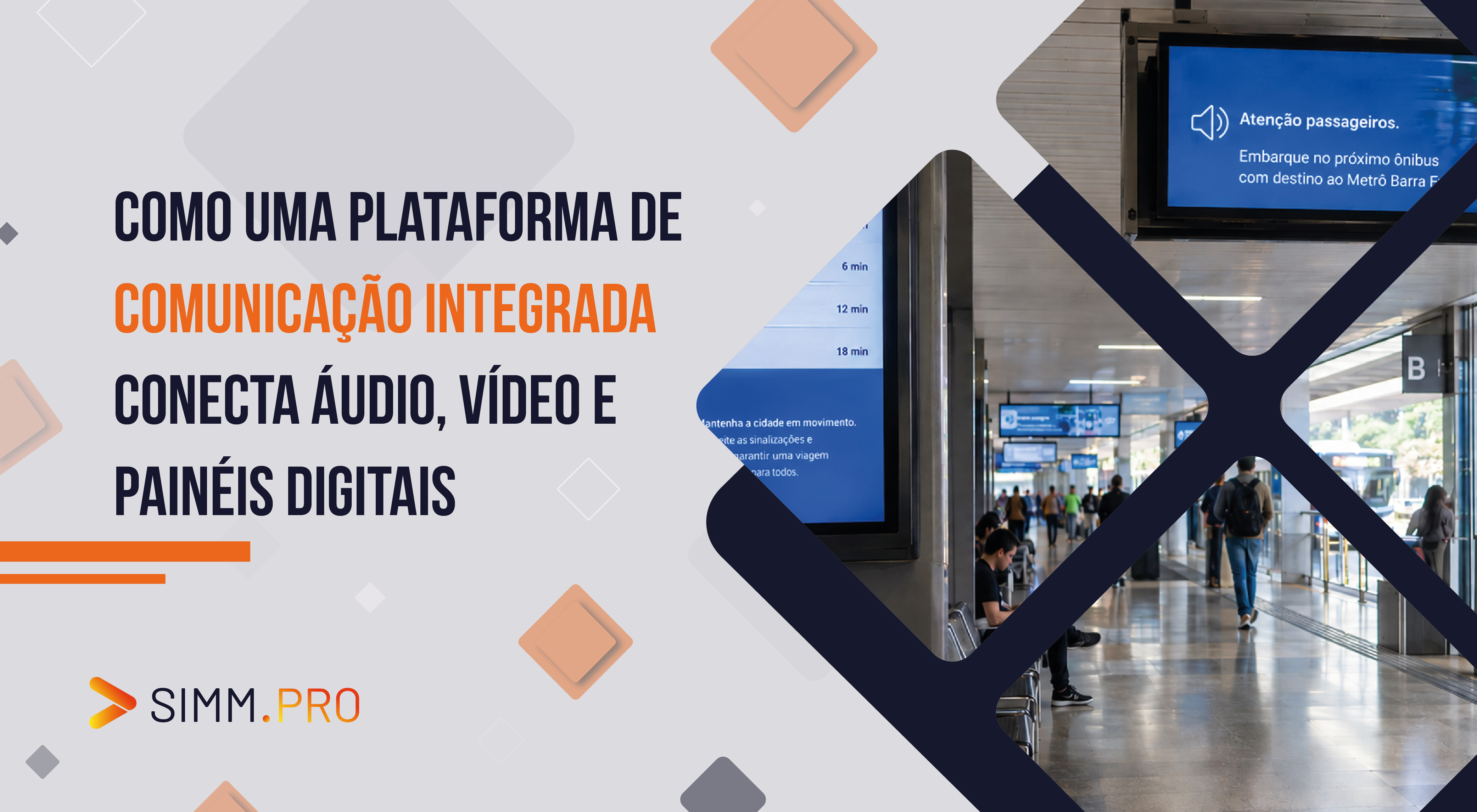
By connecting audio, video, and digital panels into a single management framework, operations can centralize information, synchronize resources, and respond more swiftly to daily changes.
What Is an Integrated Communication Platform?
An integrated communication platform consolidates various communication tools into a single management environment. Instead of each technology operating independently, audio, video, text, and digital panels can all be part of the same operational strategy.
In practice, this means that a single piece of information can be distributed across different operational points based on real-time needs.
For example, in a station, a service change could be communicated via an audio announcement, displayed on monitors, and shown on digital panels. Each channel serves a purpose, but they all work with the same information.
This integration is particularly important in high-traffic environments where people flow intensively and operational conditions can change rapidly.
Why Integrate Audio, Video, and Digital Panels?
When communication systems are managed separately, even a simple update can require multiple manual actions.
A team may need to alter a message in the audio system, update content on monitors, and modify a digital panel in a specific area. Beyond slowing down the process, this approach increases the risk of errors.
An integrated platform reduces this complexity.
With centralized management, the operational team can control multiple communication channels from a single environment. This simplifies information updates and ensures passengers receive consistent messaging, regardless of the channel used.
More than just a matter of convenience, this integration has a direct impact on operations.
How Does Integration Between Audio, Video, and Digital Panels Work?
To understand the process, think of communication as an information chain.
First, there’s an operational piece of information—such as a schedule change, platform shift, safety alert, or passenger guidance.
Next, this information must be distributed across available resources in the environment.
In an integrated solution, the same content can be directed to different channels as needed. An alert can be played through the audio system while a corresponding message appears on a monitor or digital panel.
Communication can also be segmented by area. For example, information relevant to a specific platform doesn’t necessarily need to be broadcast across the entire terminal.
This ability to define where, when, and how a message is presented makes communication more precise.
Audio Plays a Key Role in This Integration
Despite the rise of screens and digital panels, audio remains an essential tool for public communication.
In busy environments, not every passenger is looking at a monitor when information is updated. An audio announcement can capture attention and deliver guidance immediately.
For instance, during an operational change, audio can inform passengers while visual resources reinforce the same message.
This combination creates multiple touchpoints with the audience, increasing the likelihood that the information will be noticed.
Additionally, integrated sound systems allow for different audio zones, directing messages to specific locations without unnecessary interference in other areas.
What’s the Role of Video and Digital Panels?
Visual resources complement audio by providing information that remains available for reference.
Monitors and digital panels can display schedules, destinations, guidance, operational changes, and other relevant content for passengers.
In a transportation operation, this visual information can be updated as service changes occur. Thus, passengers don’t rely solely on audio messages to understand what’s happening.
The combination of audio and visual resources also caters to different moments in the journey. While one passenger may hear an alert while walking through the terminal, another may consult a monitor to confirm the details.
Therefore, integrating channels isn’t just about repeating messages—it’s about strategically leveraging each resource.
How Real-Time Communication Transforms Operations?
In urban mobility, conditions can change rapidly. A delay, route alteration, or incident can shift the dynamics of a terminal in minutes.
That’s why an integrated communication platform must keep pace with operational demands.
Real-time communication allows updates across different channels as operational information changes. This ensures passengers receive timely guidance and teams can respond more quickly.
This capability also enables smarter communication, where different areas receive context-specific content.
For example, a terminal could display one message in a boarding area while another region receives a different instruction.
Technology shifts from merely transmitting messages to becoming part of the operational management itself.
The SIMM.PRO and Communication Integration
This is precisely why SIMM.PRO focuses on an integrated communication approach.
The platform combines audio, video, text, IoT, and real-time communication into a centralized management structure.
This allows different communication tools to work in coordination, adapting to the needs of each operation.
Beyond offering various technologies, the goal is to make them function together seamlessly.
In a mobility operation, this means transforming operational data into messages that can reach passengers through multiple channels, contributing to clearer communication and a more efficient experience.
Why Centralizing Communication Makes a Difference?
As operations grow, so do the volume of information and equipment. Managing each resource independently can complicate workflows and hinder responses to changes.
Centralization simplifies this scenario.
With a single management framework, teams gain a more organized overview of communication resources and can operate with greater agility.
Integrating audio, video, and digital panels is a critical step for operations that need to communicate information quickly and consistently.
When these resources operate in isolation, it’s harder to keep content synchronized and adapt to environmental changes. When they’re part of a unified platform, communication becomes more centralized, flexible, and prepared to handle operational dynamics.
For passengers, this means clearer information and a more predictable journey. For teams, it means better control and faster communication management.
In an increasingly connected mobility landscape, integrating technologies isn’t just about modernization—it’s about turning communication into a strategic operational tool.
If your operation aims to integrate multiple communication channels, boost efficiency, and deliver a more comprehensive experience to passengers, consider requesting a quote with our specialized team.