In high-complexity operations, such as metro stations, airports, industries, shopping malls, and large enterprises, communicating accurately, segmented, and fully synchronized is essential to ensure efficiency, safety, and a good user experience.
This is exactly why SIMM.PRO was created.
The platform centralizes and integrates audio, video, text, and IoT in a single environment, allowing each area of the operation to function intelligently, automatically, and fully coordinated. With this architecture, your team gains the flexibility to scale, schedule actions, create dynamic flows, and respond quickly to any scenario, from daily messages to critical alerts.
In this article, you will understand how the SIMM.PRO licensing model works, why it is efficient, and how it supports operations that need to grow securely, with standardization and autonomy. The idea is to guide you simply and practically to visualize the full potential of the solution. 😉
What is a Zone in SIMM.PRO
First of all, it is essential to understand what a zone is. In SIMM.PRO, a zone is a logical communication area that defines what will be displayed, where it will be displayed, and how the content will be distributed.
A zone can represent:
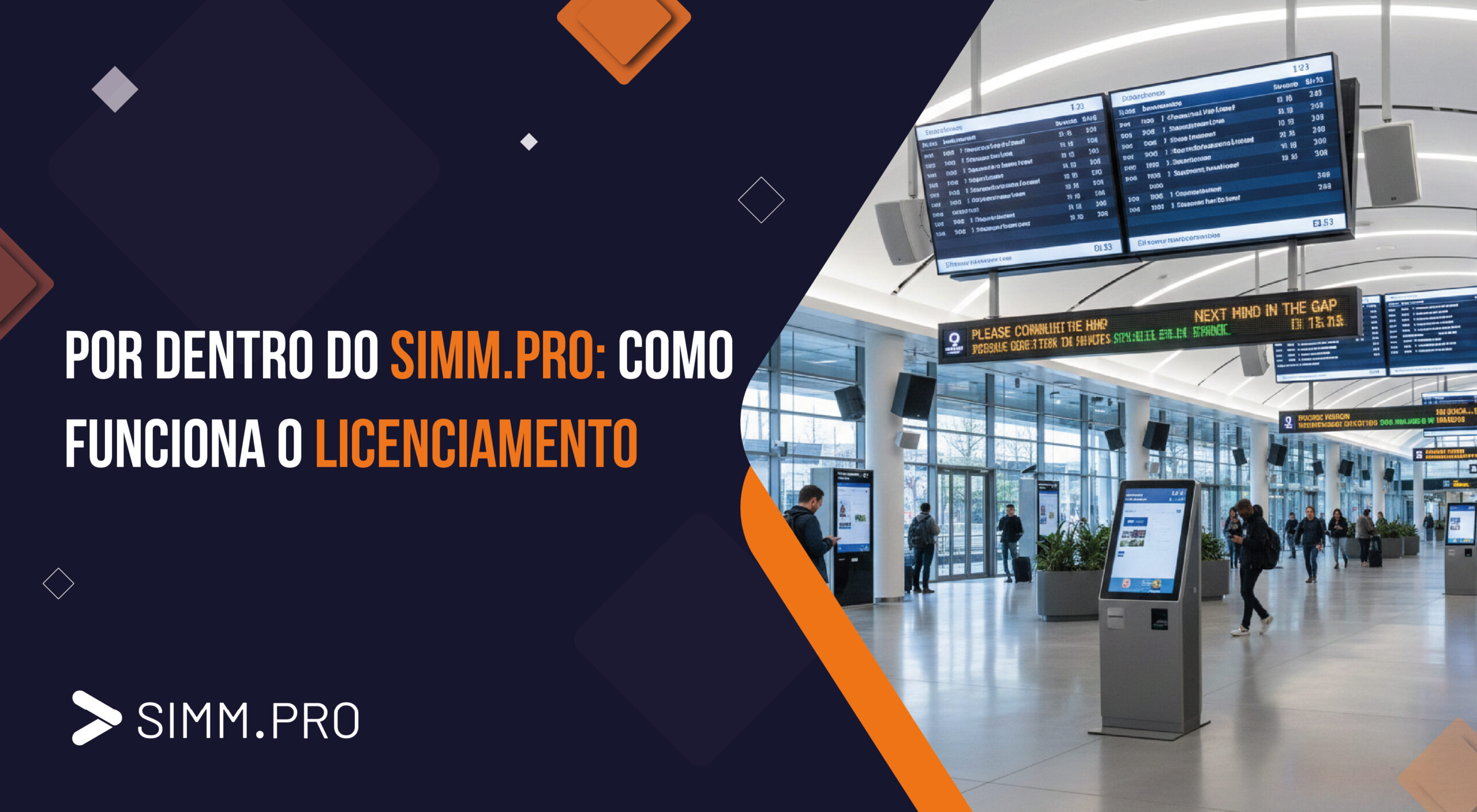
- A monitor displaying flight information
- A LED panel with text messages
- A set of speakers in a terminal
- A multimedia kiosk
- A group of devices that follow the same content behavior
In practical terms, the zone is the minimum organizational unit of SIMM.PRO. It is through it that the manager structures and controls all communication in the environment.
How Zone Licensing Works
SIMM.PRO operates with floating zone licensing. Each configured zone consumes a license, regardless of the physical device used. The focus is not on the hardware, but on the operational logic.
This model replaces equipment licensing and brings a clear advantage. You can easily add monitors, players, speakers, or panels. Just create the necessary zones and move forward.
Why Zone Licensing is So Advantageous
The architecture of SIMM.PRO was designed for dynamic, distributed, and constantly evolving environments. Zone licensing translates this philosophy into practice.
Seamless Scalability
If your operation needs to grow, just add new zones. There is no need to restructure the system or change the deployment model. Everything expands naturally.
Granular Control
Each zone has its own programming logic, schedules, and content. This ensures an ideal level of precision for airports, stations, industries, shopping centers, and other environments with high foot traffic.
Intelligent Integration
The zone structure facilitates combinations of audio, video, sensors, APIs, and other operational resources. This flexibility benefits complex operations that need to coordinate multiple information flows.
How Licensing Integrates with the Federated System Concept
Many operations use SIMM.PRO in a federated model. In this architecture, each branch, terminal, or unit has its own system, while a leading SIMM.PRO centralizes governance.
In this scenario, zone licensing becomes a strategic ally:
- Each unit manages its own zones
- The main system can access remote zones when necessary
- Expansion is modular and follows the demand of each location
The result is a standardized, organized, and highly scalable ecosystem, preserving regional autonomy without losing central control.
How to Plan the Ideal Number of Zones in the Project
When defining the number of zones for your project, consider some essential points:
- How many monitors will be used
- How many audio sets need independent programming
- How many LED panels are part of the operation
- If there will be integration with IoT or sensors
- If the project requires live audio
- If there is a forecast for growth in the short and medium term
A good practice is to allow for a safety margin. This way, your operation can expand without interruptions or unexpected resizing.
Flexibility and Intelligence for Your Communication
The zone licensing of SIMM.PRO was developed to keep up with living environments. It grows as you grow and adapts to the real needs of your communication ecosystem.
By understanding this model, your team gains more clarity to plan, expand, and operate complete audio, video, and passenger information solutions. It is the ideal combination of simplicity, scalability, and control.
Want to evaluate the ideal structure for your project or better understand how to plan zone licensing? How about talking to our specialized team?