In urban mobility operations, information needs to keep pace with the rhythm of the city. The flow of passengers changes throughout the day, and communication must adapt quickly to keep operations organized and efficient.
This is exactly where dynamic scheduling makes a difference.
With this technology, communication systems can automatically change the content displayed on monitors, LED panels, and sound systems according to schedules, operational demands, and the movement of people.
What is Dynamic Scheduling?
Dynamic scheduling is a feature that allows for the automatic alteration of content displayed in communication systems based on predefined rules or real-time conditions.
In practice, this means that:
- Content changes according to the time
- Information can be directed to specific zones
- Emergency alerts receive automatic priority
- Campaigns can vary according to terminal traffic
- Operational messages appear only when necessary
Instead of relying on manual changes all the time, the system understands the context of the operation and adapts communication intelligently.
How Does Passenger Flow Influence Communication?
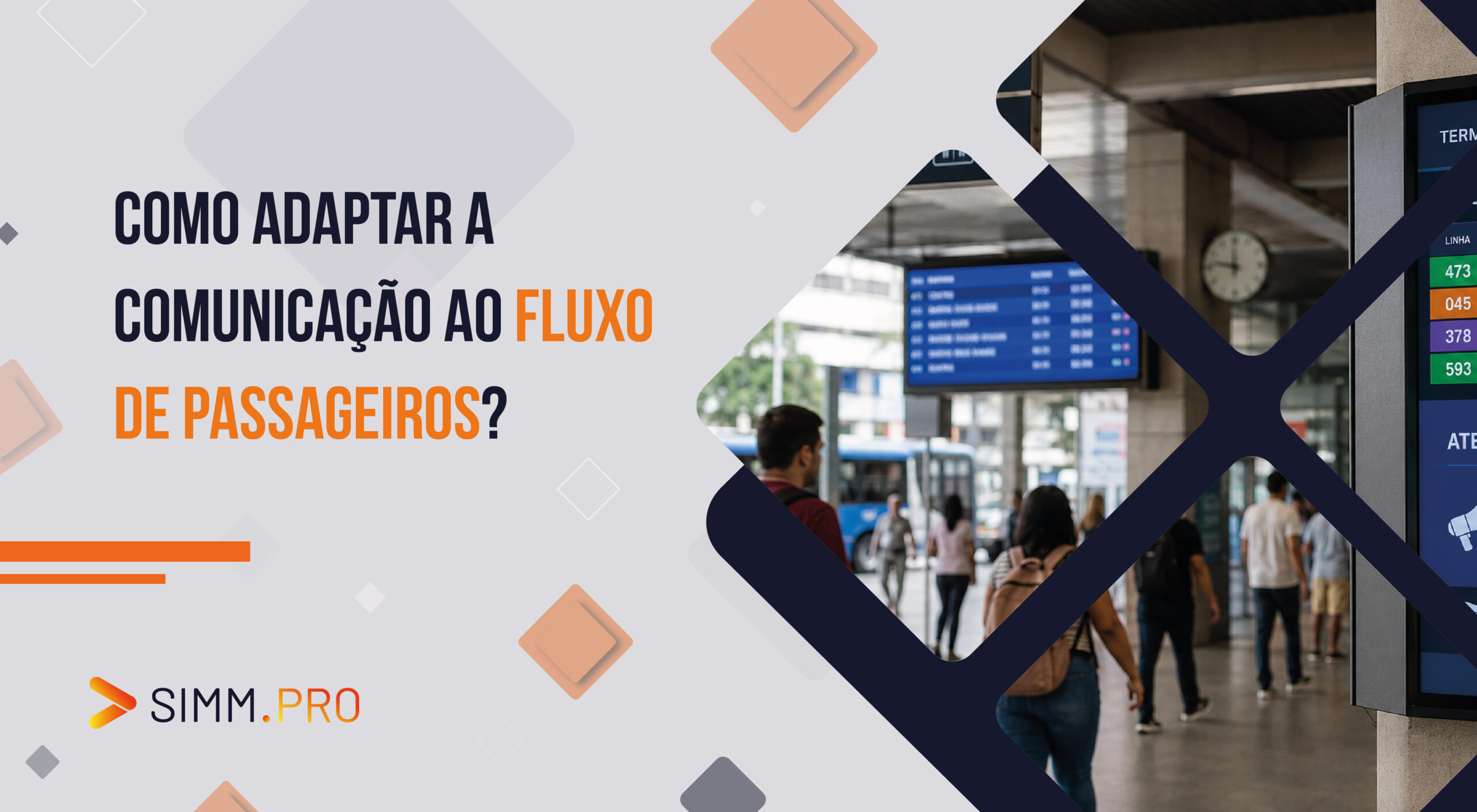
During peak hours, for example, the priority may be to display quick information about platforms, departures, and operational changes. In times of lower flow, the system can switch to institutional campaigns, educational notices, or informative content.
This adaptation significantly improves the passenger experience and reduces communication failures.
Moreover, when audio, video, text, and IoT work together, updates occur in a synchronized manner across the entire operation.
The Importance of Real-Time Communication
In urban mobility, seconds make a difference.
A platform change, operational delay, or line interruption needs to be communicated immediately to avoid confusion, queues, and crowding.
With integrated audio, video, and text systems, information arrives simultaneously at:
- Monitors
- LED panels
- Sound systems
- Integrated applications
- Devices connected via IoT
This synchronization enhances the passenger experience and increases operational efficiency.
How SIMM.PRO Uses Dynamic Scheduling
SIMM.PRO was developed for operations that require intelligent and centralized communication. It allows for the creation of flexible and automated schedules for different types of content, zones, and times.
Each environment has specific needs; for example, in airports, priorities may change according to boarding times. In train stations, the focus may be on operational changes and high traffic during certain periods.
Dynamic scheduling represents an important advancement for urban mobility operations seeking greater efficiency, automation, and quality in the passenger experience.
By adapting information according to passenger flow, operators can provide more relevant communication, reduce failures, and make urban environments more organized and intelligent.
With integration between audio, video, text, and IoT, SIMM.PRO transforms communication into a strategic tool for modern transportation and mobility operations.
If your operation seeks greater efficiency, innovation, and a better experience for passengers, how about requesting a quote from our specialized team?