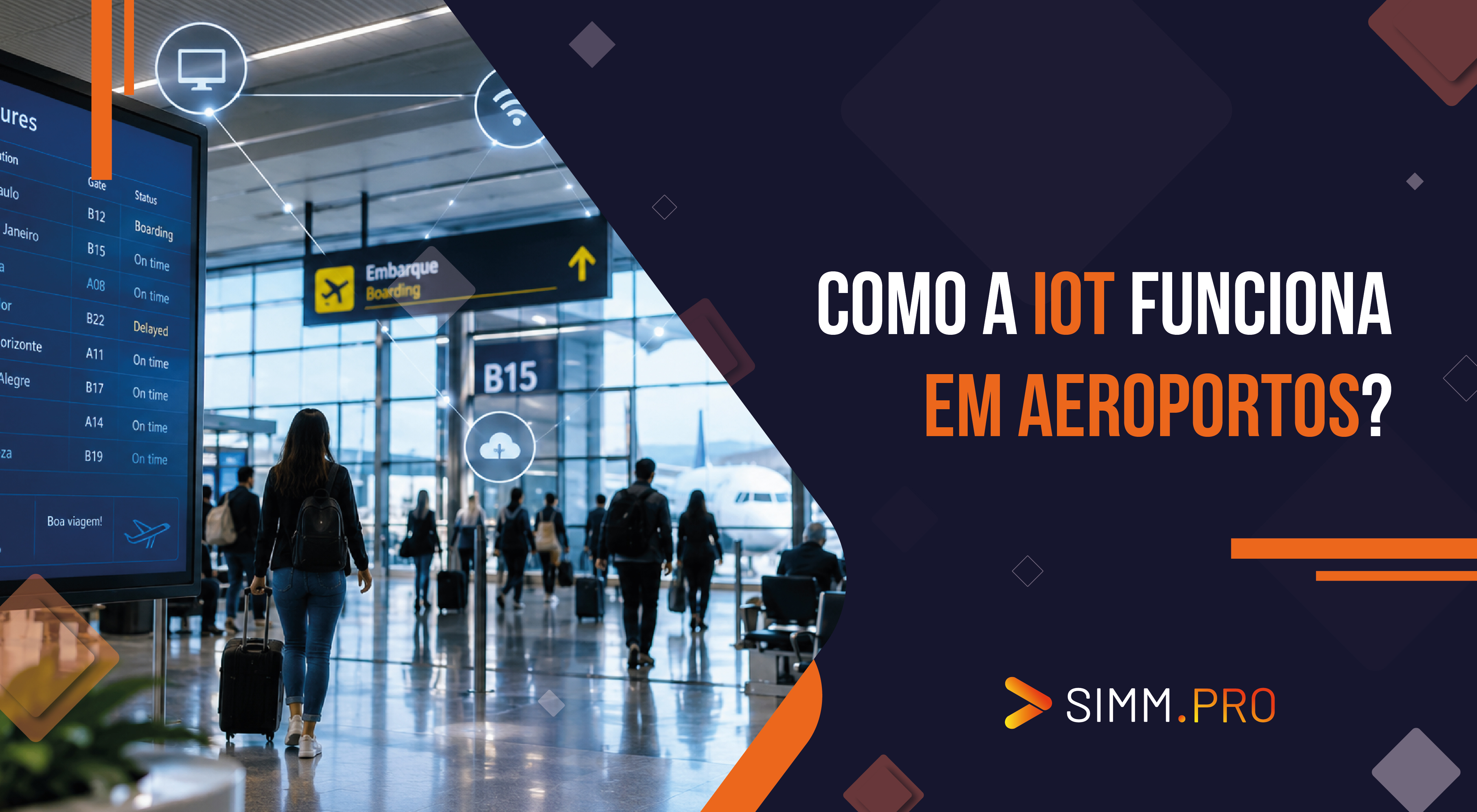
An airport is a constantly moving environment. Every day, passengers, crews, aircraft, vehicles, and different systems must work in coordination to ensure the operation runs efficiently.
In this context, communication plays a role far beyond simply announcing flight schedules. It is essential to guide passengers, communicate changes, direct flows, transmit alerts, and ensure different areas have access to the necessary information at the right time.
This is precisely where IoT in airport communication is gaining increasing prominence.
The Internet of Things, or IoT, enables the connection of devices, equipment, and systems to collect, share, and utilize information in an automated manner. When applied to airport communication, this technology can help transform operational data into faster and more relevant information for both passengers and staff.
But how does this work in practice? And how can connected devices contribute to more efficient communication within an airport?
What Is IoT?
The Internet of Things involves connecting physical devices to communication networks, allowing them to send, receive, or share data.
In an airport, this can include various equipment and systems that are part of the operation, such as sensors, monitoring devices, information systems, panels, audio equipment, and other technologies working in a connected manner.
The key difference lies in the ability to turn this information into actionable steps.
For example, imagine an area of the airport detecting unexpected movement. Depending on the available technological infrastructure, this data can be used to support operational decisions, guide staff, or even adapt communication directed at passengers.
Thus, IoT moves beyond being just a connectivity technology and contributes to a more integrated operation.
How IoT Enhances Communication in Airports
Airport communication must keep pace with an operation that can change rapidly.
A flight may experience a schedule change, a gate may be modified, a particular area may experience higher passenger traffic, or an event may require immediate guidance.
When systems are connected, this information can circulate more quickly among different operational resources.
This is where IoT in airport communication can make a difference.
Instead of relying solely on manual processes, a connected operation can use information from various devices to support updates in communication channels.
This creates a closer relationship between what is happening in the environment and what is communicated to passengers.
Which Communication Channels Can Be Integrated with IoT?
IoT can be part of a larger integrated communication structure, connecting various resources used in the airport.
These include audio systems, monitors, digital panels, and passenger information platforms.
Imagine an operational change that needs to be communicated in a specific area. An integrated structure can use the available information to direct a message to the appropriate channels.
The audio system can broadcast a warning, while monitors and digital panels display the same guidance visually.
This integration is important because not all passengers perceive information in the same way. Some may be watching the monitors, while others may hear an announcement while moving through the airport.
By combining different channels, the operation increases the likelihood that the message reaches the audience.
IoT, PIS, and Integrated Communication: How These Technologies Work Together
The Passenger Information System, or PIS, plays a crucial role in airport communication.
It is responsible for displaying important information for users, such as flight schedules, gates, and other guidance related to their journey.
When the PIS is integrated into a larger communication structure, it can work alongside other technologies.
IoT can contribute by providing information from connected devices, while audio and video systems use this data to communicate with the public.
The result is a structure where different technologies no longer function in isolation.
This integration allows communication to better follow the dynamics of the operation and contributes to a more organized passenger experience.
What Are the Benefits of IoT for Airport Management?
The use of connected devices can generate benefits for both passengers and the teams responsible for the operation.
One of the main benefits is related to agility.
When information can circulate between systems in an automated manner, teams can respond more quickly to certain situations.
Another benefit is centralization. Instead of relying on information distributed across different systems, the operation can work with a more connected structure.
IoT can also contribute to a broader view of the environment. Data from various points helps better understand what is happening and can support operational decisions.
This does not mean replacing the teams, but rather providing information that helps professionals work more efficiently.
The SIMM.PRO and Smart Communication in Airports
It is in this context of integration that SIMM.PRO operates.
The platform combines audio, video, text, IoT, and real-time communication into a centralized management structure.
In practice, this allows connecting various communication resources and organizing the distribution of information according to the operation's needs.
For example, in an airport, communication may involve audio systems, monitors, panels, and various passenger information points.
By integrating these resources, SIMM.PRO contributes to more coordinated communication, ensuring that information is distributed efficiently and keeping up with operational changes.
More than just connecting equipment, the goal is to make different technologies work together to support the operation and enhance the experience of those navigating the airport.
The Future of Airport Communication Lies in Connectivity
The evolution of airports is directly related to the ability to connect people, equipment, and information.
In this context, IoT represents a key tool for making operations more integrated and responsive.
When combined with passenger information systems, audio, video, and real-time communication, the technology creates new possibilities for transmitting information more quickly and contextually.
For passengers, this means finding clearer information during their journey. For the teams, it represents more resources to monitor operational changes and address the needs of the environment.
The IoT in airport communication should not be seen merely as a technological trend. It is part of a broader transformation in how mobility environments collect information, connect systems, and communicate with people.
The more connected the operation is, the greater its ability to turn data into useful communication, contributing to more efficient, organized airports prepared for the challenges of modern mobility.
If your operation seeks to integrate technology, real-time communication, and a better experience for passengers, consider requesting a quote with our specialized team.